
Baseline Schedule Construction Services
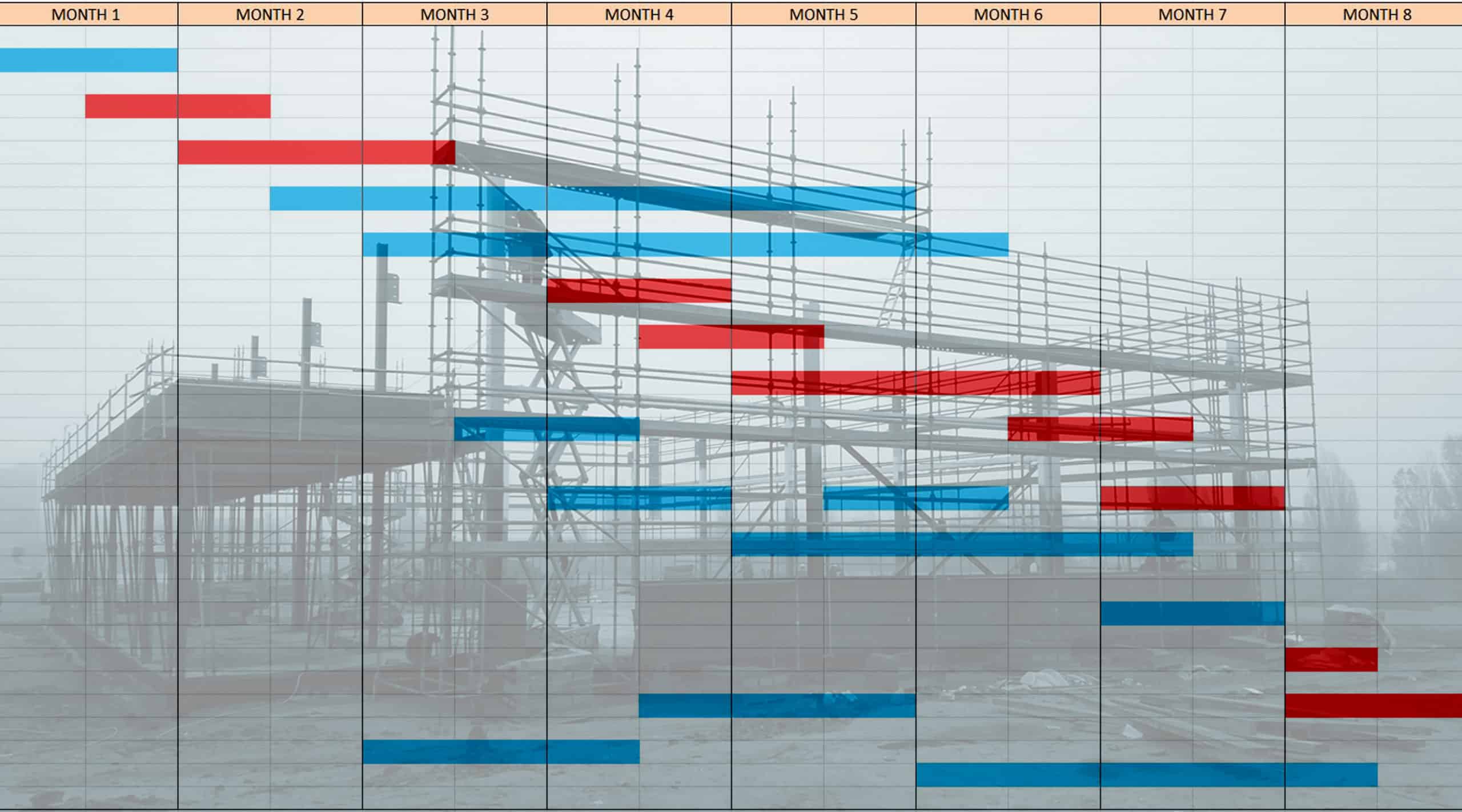
Project Baseline Scheduling Services: Ensure Timely Delivery with Accurate Tracking
A comprehensive baseline construction schedule is the cornerstone of any successful construction project. At Keystone Scheduling, our experts combine the Critical Path Method (CPM) with construction best practices and optimized resource allocation to deliver a detailed and accurate baseline schedule for construction.
With us, construction projects get a dynamic roadmap that aligns with project budgets, timelines, and stakeholder expectations.
📍Whether you are managing a complex infrastructure project, a high-stakes commercial build, or the construction of a custom house, our baseline schedule construction process provides the project visibility and control needed from day one.
How do Baseline Schedules for Construction Companies Help
A baseline schedule is the approved version of the construction schedule, which acts as a fixed reference point (or benchmark) for measuring project performance and monitoring progress. It incorporates the planned start/finish dates, activity logic, resources, and milestones to provide a snapshot of how the project is intended to be executed.
With the help of an established baseline in construction, projects gain the following:
1. Performance Tracking and Variance Analysis
By comparing actual progress to the baseline, project managers can pinpoint delays and cost overruns immediately, transforming subjective assessments into objective data.
2. Controlled Change Management
Baselines offer a documented and approved reference point, making it easier to evaluate and calculate the impact of scope changes or delays.
3. Improved Resource Allocation
Baselines facilitate the efficient scheduling of labor, materials, and equipment by outlining the most time-sensitive tasks (critical path).
4. Dispute Resolution
In legal or contractual disputes, a baseline schedule is the primary evidence needed to prove the primary reason behind delays, supporting claims for additional time or money.
Why an Accurate Baseline Schedule for Construction Projects is Essential
A baseline schedule sets a project timeline and measures the actual project performance against this, keeping every task, milestone, and deliverable on track. With an accurate and detailed baseline schedule for your construction project, you can enjoy the following benefits:
Key components include:
Accurate Forecasting:
By mapping every activity, predecessor, and duration in Primavera P6 or Microsoft Project, you gain visibility into the true project critical path and potential float.
Budget Control:
By accurately allocating labor, equipment, and material costs to each work package, outlining bottlenecks, and preventing inefficiencies, you can monitor burn rates and forecast cash flow requirements.
Risk Mitigation:
Early identification of schedule conflicts and resource constraints empowers you to implement mitigation strategies before issues arise.
Claims Defense:
A well-documented baseline becomes your “as-planned” benchmark, critical when performing delay analysis or defending against extension-of-time claims.
Delay Analysis and Control
The baseline schedule provides a basis for assessing the impact of delays, helping to manage project changes and prevent, or recover from, schedule overruns.


Our Process for Creating a Baseline Schedule for Construction Companies
As experts in baseline scheduling, we turn extensive projects into smart, streamlined schedules that are built with real data, clear logic, and expert precision. We optimize timelines and resources with the right data to keep your project moving forward.
The key steps to follow for creating a baseline schedule for construction projects include:
1. Project Kick-Off and Data Gathering
We collaborate with your team to collect plans, specifications, contracts, and resource availability to lay a solid foundation.
2. Work Breakdown Structure (WBS) Creation
Activities are organized into a hierarchical WBS, ensuring every deliverable and milestone is captured in structured detail.
3. Logic and Dependency Definition
We define start-to-finish, finish-to-start, and other dependencies to reflect realistic project sequencing and relationships.
4. Duration and Resource Loading
Durations are estimated using historical data and industry benchmarks. Resources and costs are assigned to quantify budget and manpower impacts.
5. Schedule Validation and Optimization
Through critical path analysis and schedule risk modeling, we optimize logic, durations, and resource allocation for peak performance.
6. Baseline Approval and Documentation
The final approved baseline is delivered with a comprehensive report, including Gantt charts, resource histograms, and cost-loaded S-curves.
Why Keystone Scheduling Is The Best Choice for Creating Baseline Schedules for Construction Projects
By choosing Keystone Scheduling as your partner for baseline schedule development in construction projects, you get a comprehensive plan that carries the following components:
Technical Expertise: Our deep understanding of the Critical Path Method (CPM) helps us create a schedule based on the project’s specific needs.
Practical Construction Knowledge: Our team is well-versed in the ground realities of construction projects, which is why our team incorporates contingency buffers for known risks instead of giving an optimistic timeline.
Comprehensive Project Control: We don’t just help with a baseline in construction. We outline a set of checks that can easily identify factors that can cause a
delay and mitigate their impact.
Contact us
today to request your custom baseline schedule development quote and take the first step toward predictable, profitable construction delivery.

FAQs for Baseline Scheduling in Construction
The baseline must be officially approved by key stakeholders, including the owner, general contractor, and sometimes the project manager, before it is implemented.
Yes, but only through formal change management procedures. This happens because the baseline is a “frozen” snapshot that should only be modified to reflect approved scope changes, major delays, or re-baselining caused by significant changes in project objectives. Thus, good baselines in construction are built with enough flexibility to address issues and adapt accordingly.
During execution, you update the current schedule with actual start/finish dates and remaining durations. By comparing this “current” schedule against the original “baseline” schedule, you can identify variances in progress, such as activities trending behind or ahead.
Without a baseline, it is impossible to accurately track delays, evaluate if the project is over-budget, or prove claims for extension of time (EOT) to owners. It leads to poor project control and accountability.